

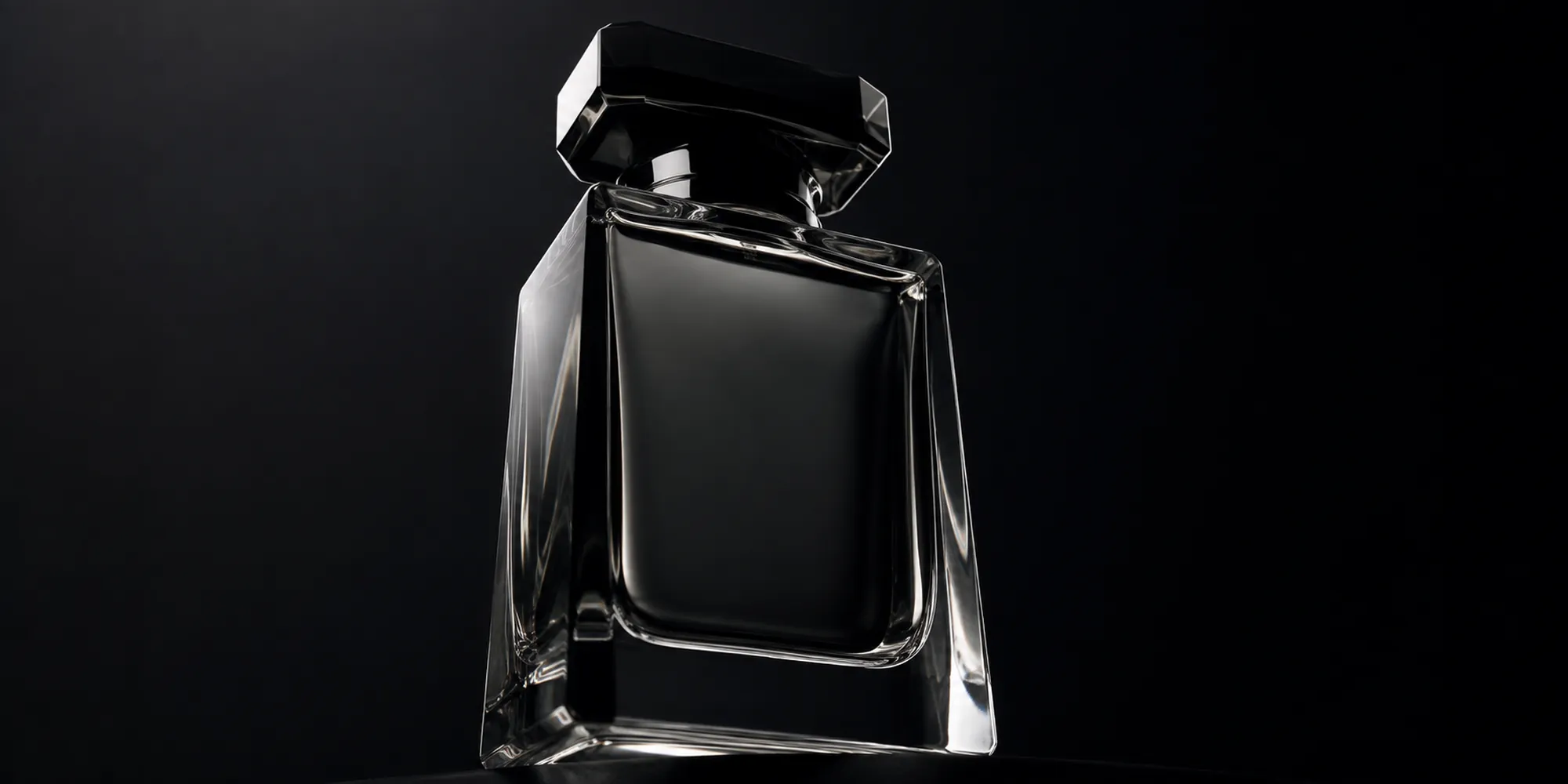
Pick up the bottle you almost bought. Feel the weight of the glass. The magnetic cap. The heavy base that sits on the counter like it owns the place.
Now here is the part nobody at the counter will tell you. Almost none of what you are about to pay is for the smell.
You are paying for the object. The scent is close to free.
The number that ruins the counter for you
The fragrance oil inside a designer bottle is cheap. Not cheap like a discount. Cheap like pennies.
Industry breakdowns put the actual juice at a low single-digit share of the retail price. Call it a few percent. A bottle that rings up at $150 might hold a couple dollars of scent. A $300 bottle does not hold ten times more scent. It holds a heavier cap and a bigger ad budget.
That gap has a name. We call it the bottle tax.
Where your money actually goes
Break the price of a designer fragrance into what you are really buying, and the smell is the smallest slice. Here is the rest.
The glass and the cap. Weighted bases, magnetic closures, engraved lettering. Designed to feel expensive in your hand at the exact moment you decide to buy. That heft is not scent. It is a sales tool.
The box and the cellophane. Printed, foiled, shrink-wrapped, and thrown away the second you get home.
The campaign. The actor on the billboard. The thirty-second film shot in slow motion on a cliff in Italy. The magazine spreads. A celebrity face on a fragrance can cost a fortune, and every buyer pays a share of it.
The counter. The department store space, the lighting, the person who sprays the card and hands it to you. Retail real estate is not free, and it gets added to your total.
The house margin. Then the brand takes its cut on top of all of it.
Add those up and you can see where $300 goes. It goes almost everywhere except into the bottle.
Why this feels normal (and why that is the trick)
You have been trained to read a heavy bottle as quality. That training was expensive to install and it works. The weight, the cap, the box, the billboard all say the same thing before you have smelled anything. This is worth a lot.
So you never ask the obvious question. How much of this is the smell?
The industry would rather you not ask. The whole model depends on you valuing the package. Because the package is the part with the markup. The scent is the part they can barely charge for, so they wrap it in three hundred dollars of everything else.
None of this means the fragrance houses are villains and the perfumers are frauds. The perfumers are artists and the good scents are genuinely good. The scam is not the smell. The scam is the tax bolted onto the smell.
The move a sharp buyer makes
Once you see the tax, you cannot unsee it. And you get a choice most people never realize they have.
You can keep paying for glass you will throw the box away from. Or you can pay for the scent and skip the rest.
That is the whole idea behind a decant. Take the real fragrance, the actual authorized juice, and pour it into a plain travel atomizer instead of the showroom bottle. No weighted base. No campaign built into the price. No counter markup. Same smell on your skin, because it is the same fragrance.
To be clear, a decant is not a dupe. Dupes are cheap imitations trying to smell close to the real thing. A decant is the real thing, measured out of a sealed designer bottle into a smaller vessel. If you are too sharp to overpay, you are also too sharp to walk around in a fake. A decant is how you get neither.
We go deep on the how-do-I-know-it-is-real question in Are Fragrance Decants Authentic? How to Tell Real From Fake. It is the right question to ask, and it has a clean answer.
“But I like the bottle”
Fair. The bottle is a beautiful object. Nobody is arguing it looks bad on a shelf.
Here is the reframe. You are allowed to like the bottle. Just be honest about what it is. It is a roughly $300 paperweight, and the paperweight is most of the price. If you love the design and want it on display, buy it as decor and enjoy it. That is a real reason.
But if you bought it for the way it smells on your skin, you overpaid for a shelf ornament and got the scent thrown in. The smart money keeps the scent and lets the ornament go.
Then do the math one more time
Here is where it gets interesting. For the price of that one designer bottle, you could own the real juice of that scent in a 30mL travel size, and have money left over for two more.
That is not “buy the same thing cheaper.” That is a different way to own fragrance entirely. Instead of one trophy you wear until you are bored of it, you get a rotation. Three real scents for different moods and seasons, for roughly what the counter wanted for one.
We run the full comparison, dollar for dollar and spray for spray, in Fragrance Decants vs Full Bottles: The Math Nobody Shows You.
The bottom line
You were never buying scent at the counter. You were buying glass, a box, a billboard, and floor space, with a little smell wrapped inside. The bottle is the scam. The fragrance is the point.
High fragrance IQ is just refusing to pay the tax.
If you want to see what it costs to own the actual scents you have been eyeing, without the glass markup, take the Find Your Signature quiz or build a small rotation and start with the ones you already know you want. Same smell. None of the tax.